Yes. A school screening checks basic distance vision but can miss important issues like focusing problems, eye alignment issues, and early signs of conditions like astigmatism or amblyopia. A full exam is much more thorough.
Pediatric Eye Exams in Weslaco
Clear Vision Supports Learning, Play, and Everyday Life
QUICK LINKS
Frequently Asked Questions
Eye exams don't require your child to read. our optometrist uses tests designed for young or pre-verbal children, including tools that measure how the eye responds to light and images. Age is not a barrier to getting an accurate exam.
Not necessarily. Many children have healthy vision and simply need a baseline exam on file. If a prescription or treatment is needed, we'll explain the findings clearly so you can make an informed decision.
Myopia, or nearsightedness, means distant objects appear blurry. It's one of the most common vision conditions in children, and it often develops during the school-age years. A pediatric eye exam can diagnose myopia and help you understand what it means for your child's vision.
The length of your child's appointment depends on their age, what is being evaluated, and whether any additional testing is needed. Your optometrist will let you know what to expect when you schedule.
Vision Problems Are Not Always Obvious
Your child's vision directly affects how they learn, play, and grow. A pediatric eye exam at Weslaco Eye Professionals can catch problems early, often before you or your child notice anything is wrong.
Why Children's Eye Exams Matter
Children don't always know their vision is off. That's why routine eye exams matter. When a problem goes undetected, it can affect reading, schoolwork, sports, and confidence.
A comprehensive pediatric eye exam checks far more than whether your child can see the letters on a chart. It evaluates how each eye focuses, how the eyes work together, and whether there are any early signs of conditions that respond best to treatment when caught young.
Signs Your Child May Need an Exam
Your child may not tell you their vision is blurry, but their behavior often will. Consider scheduling an exam if you notice any of the following:
- Sitting very close to the TV or holding books too near their face.
- Squinting or tilting their head to see better.
- Frequent eye rubbing that isn't related to tiredness.
- Complaints of headaches, especially after reading or screen time.
- Difficulty keeping up with reading or schoolwork.
- One eye that turns in, turns out, or looks different from the other.
These signs don't necessarily mean something is wrong, but they're worth discussing with an eye doctor.
What to Expect at Your Child's Eye Exam
We know bringing a child to any appointment can feel uncertain. Here's what you can generally expect during a pediatric eye exam at Weslaco Eye Professionals:
Our optometrist will start by talking with you about your child's health history, any concerns you've noticed, and how your child is doing in school. From there, the exam typically includes:
Visual acuity testing — checking how well your child can see at various distances, using charts adapted for different reading levels and ages.
Eye alignment and movement checks — making sure both eyes track together properly and move smoothly.
Focusing ability — evaluating how well each eye adjusts between near and far distances.
Eye health evaluation — examining the front and back of the eye for signs of disease or structural concerns.
If there are signs that your child may be developing myopia (nearsightedness), the exam can identify that, and our team will walk you through what it means and what to consider next.
Myopia, or nearsightedness, causes distant objects to appear blurry. It often develops during childhood, which is why parents may first notice squinting, trouble seeing the board, or sitting closer to screens.
Weslaco Eye Professionals can provide the initial evaluation and diagnosis of myopia. If your child shows signs of nearsightedness, your optometrist can explain what was found and discuss the appropriate next step.
A Pediatric Eye Exam Looks Beyond the Eye Chart
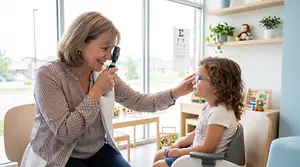
Your child's appointment begins with a conversation about their vision, health history, and any changes you have noticed at home or school.
The exam is tailored to your child's needs and may assess how clearly they see, how their eyes work together, and whether any changes need monitoring. Our optometrist has training in primary eye care and takes time to understand what each patient and family needs from their exam.
Get Clearer Answers About Your Child's Vision
If your child is squinting, struggling to see at a distance, complaining of blurry vision, or simply seems to be seeing differently, an eye exam can help you get clearer answers.
Schedule a pediatric eye exam with Weslaco Eye Professionals to learn more about your child’s vision and whether any follow-up care may be appropriate.